Total hip arthroplasty (THA) is one of the most successful surgical procedures in the world. However, many younger patients, usually under 65 years of age, suffering from osteoarthritis are faced with the decision between delayed surgery or a limited return to activity with an increased risk of future surgery later in life.
Hip resurfacing represents a more conservative treatment option for younger patients that may prolong the time until total hip replacement is required. The clinical success of currently available metal-on-metal (MoM) hip resurfacing prostheses has exceeded initial expectations and may allow younger men in particular to have many more years of active life before conventional total hip replacement is necessary.
Advantages of Hip Resurfacing (“Cap Prosthesis”)
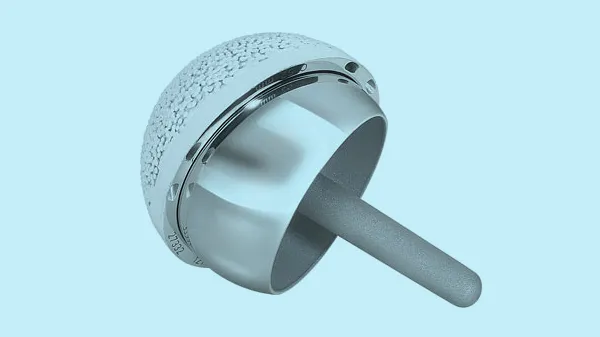
In a traditional hip replacement, the head of the femur is completely removed and replaced with a new ball on a stem that is inserted into the femur. In contrast, a hip resurfacing procedure removes only the worn-out cartilage and preserves the neck and most of the head of the femur. A thin-walled ball is placed over the head of the femur, while an equally thin shell is inserted into the socket (your pelvis).
Unlike conventional hip replacements, which use a smaller ball in the socket (typically up to 32 or 36 mm in diameter), hip resurfacing restores the natural size of your own hip (typically over 50 mm in diameter). This provides an immediate benefit for joint stability, and postoperative dislocations are extremely rare: 3-5 times less likely than with a total hip replacement.
Femoral head resurfacing provides better restoration of anatomy and natural gait compared to a traditional hip replacement. Experienced surgeons agree that hip resurfacing allows patients to return to a wider range of sports and recreational activities compared to total hip replacement. This return to activity usually occurs much earlier in the post-operative recovery period. Patients report high levels of activity, including running, and these high levels of activity are maintained for more than 10 years after their surgery.
If revision of the hip replacement is required in the future, the operation is technically simpler than for revision of a total hip replacement. The procedure for the femur is essentially the same as for a first-time total hip replacement.
The ADEPT® Hip Resurfacing System
The ADEPT® Hip Resurfacing System aims to replace the worn or damaged cartilage in your hip joint. It is designed to work with the natural structures (ligaments and muscles) of your hip to provide you with a stable joint and a range of motion that allows you to perform normal everyday tasks with reduced or no pain. Since its introduction in 2004, the ADEPT® Hip Resurfacing System has proven to be a highly successful procedure. The best results are seen in men and larger sizes. The ADEPT® has been awarded an ODEP 13A rating by the independent Orthopaedic Data Evaluation Panel (ODEP) based on the available clinical data.
Who is Hip Resurfacing Suitable For?
As with any joint replacement, individual and surgical factors can determine the suitability of the procedure or affect the longevity of the prosthesis.
We are happy to advise you on whether this procedure is suitable for you and to help you understand the risks, precautions, and other measures that may be relevant to you.
Famous Athletes with Hip Resurfacing
Some competitive athletes who have undergone hip resurfacing include:
-
Andy Murray (Tennis): Andy Murray underwent resurfacing of his right hip in January 2019 at the age of 32 after hip arthroscopy failed to produce the desired results. Despite the challenges of hip surgery, he quickly returned to the tennis court and won the same year after 6 months in the doubles at Wimbledon and after 8 months in the singles at the ATP tournament in Antwerp.
-
Bob Bryan (Tennis): Bob Bryan, a successful doubles player, also underwent hip resurfacing. He successfully returned to the tennis court just 5 months after his surgery at the 2019 Australian Open.
-
Floyd Landis (Cycling): Floyd Landis, a former professional cyclist, underwent hip resurfacing and continued his sporting activities after the operation.
-
Ed Jovanovski (Ice Hockey): Ed Jovanovski, a former professional ice hockey player, underwent hip resurfacing and was able to continue his career after the surgery.
-
Masi Marjamäki (Ice Hockey): Masi Marjamäki, a Finnish ice hockey player, also underwent hip resurfacing and was able to continue his sports activities after the surgery.
-
David Walker (Judo): David Walker, a British judoka, underwent hip resurfacing and successfully returned to competition.
These athletes demonstrate that hip resurfacing can enable successful rehabilitation and a return to active sport, even in competitive sports.
Link: Watch “Andy Murray: Resurfacing” on Prime Video
Dr. Alexander Moser
Your hip specialist in Berlin
”Hip surgery at the highest level”
Hip resurfacing Berlin – McMinn prosthesis – Hip resurfacing arthroplasty – Hip osteoarthritis treatment for athletes
Watch the explainer video
Frequently asked questions
What is the difference between hip resurfacing and traditional hip replacement?
<p>The key difference lies in bone resection: In a traditional hip replacement, the head of the femur is completely removed and replaced with a new ball on a stem that is inserted into the femur. In hip resurfacing, only the worn-out cartilage is removed, while the neck and most of the head of the femur are preserved. A thin-walled metal cap is placed over the prepared femoral head, while an equally thin shell is inserted into the acetabulum (hip socket).</p><p>This bone-preserving technique offers several advantages:</p><p>– Preservation of natural anatomy and biomechanics</p><p>– Larger ball head (over 50 mm) for greater stability</p><p>– Lower dislocation risk (3-5 times lower than standard prostheses)</p><p>– Better restoration of natural gait pattern</p><p>– Technically simpler revision surgery if needed</p>
Which patients are suitable for hip resurfacing?
<p>Hip resurfacing is particularly suitable for:</p><p>– <strong>Younger, active patients</strong> (typically under 65 years)</p><p>– <strong>Men</strong> (show the best results; evidence for women is more differentiated)</p><p>– Patients with <strong>advanced hip osteoarthritis</strong></p><p>– Patients with <strong>high activity demands</strong> (athletes, physically active individuals)</p><p>– Patients with <strong>sufficient bone quality</strong> in the femoral head</p><p>– Patients with <strong>larger femoral head sizes</strong> (better results)</p><p>The procedure is not suitable for:</p><p>– Advanced osteoporosis</p><p>– Large bone cysts or necrosis</p><p>– Certain forms of hip dysplasia</p><p>– Metal allergies</p><p>– Impaired kidney function (metal ion excretion)</p><p>We are happy to advise you personally on whether this procedure is suitable for you.</p>
What are the experiences of professional athletes with hip resurfacing?
<p>Hip resurfacing has proven particularly successful in professional athletes who were able to continue competing at a high level after surgery. Notable examples include:</p><p>– <strong>Andy Murray</strong> (Tennis): The British tennis player underwent resurfacing of his right hip in January 2019 at the age of 32 after hip arthroscopy failed to produce the desired results. Just 6 months later, he won the doubles at Wimbledon, and after 8 months, he won the ATP tournament in Antwerp in singles. His career was documented in the Prime Video documentary "Andy Murray: Resurfacing".</p><p>– <strong>Bob Bryan</strong> (Tennis): The successful doubles player successfully returned to the tennis court just 5 months after his surgery at the 2019 Australian Open.</p><p>– <strong>Floyd Landis</strong> (Cycling): The former professional cyclist continued his sporting activities after the surgery.</p><p>– <strong>Ed Jovanovski and Masi Marjamäki</strong> (Ice Hockey): Both professionals were able to continue their careers after the procedure.</p><p>– <strong>David Walker</strong> (Judo): The British judoka successfully returned to competition.</p><p>These athletes demonstrate that hip resurfacing can enable successful rehabilitation and return to active sport, even at the competitive level.</p>
What is the ADEPT® Hip Resurfacing System?
<p>The ADEPT® Hip Resurfacing System is a modern implant system designed to replace the worn or damaged cartilage in your hip joint. It is designed to work with the natural structures (ligaments and muscles) of your hip to provide a stable joint and a range of motion that allows you to perform normal daily tasks with reduced or no pain.</p><p>Since its introduction in 2004, the ADEPT® Hip Resurfacing System has proven to be a highly successful procedure. The best results are observed in men and larger sizes. The ADEPT® has been awarded an ODEP 13A rating by the independent Orthopaedic Data Evaluation Panel (ODEP) based on available clinical data – the highest rating for long-term outcomes.</p>
What are the long-term results of hip resurfacing?
<p>The clinical success of currently available metal-on-metal (MoM) hip resurfacing prostheses has exceeded initial expectations. Particularly younger men can benefit from many more years of active life before conventional total hip replacement becomes necessary.</p><p>Scientific studies demonstrate:</p><p>– High prosthesis survival rates after 10-15 years</p><p>– Excellent functional outcomes with return to sporting activities</p><p>– Lower dislocation rates compared to standard prostheses</p><p>– Preserved bone stock for potential revisions</p><p>Key scientific literature:</p><p>– National Joint Registry 18th Annual Report, 2021</p><p>– Lombardi AV et al. Clin Orthop Relat Res. 2011; 469(6): 1547-53.</p><p>– Barrack RL et al. Clin Orthop Relat Res. 2013; 471: 3803–3813.</p><p>– Aqil A. et al. Int Orthop. 2013; 37(5): 795-801.</p><p>– Van Der Straeten C and De Smet KA. Hip Int. 2016; 26 (1): 1-7.</p><p>– Haddad FS et al. Bone Joint J. 2015; 97-B:617–22.</p>
What is the surgical procedure and recovery time?
<p>Hip resurfacing surgery takes about 60-90 minutes and is usually performed under general anesthesia. The approach is through a lateral or posterior approach to the hip.</p><p>Recovery time is typically as follows:</p><p>– <strong>Hospital stay:</strong> 3-5 days</p><p>– <strong>First 2-4 weeks:</strong> Walking with crutches, initially with partial weight-bearing</p><p>– <strong>After 4-6 weeks:</strong> Increasing weight-bearing, start of physiotherapy</p><p>– <strong>After 6-12 weeks:</strong> Usually pain-free walking, return to light sporting activities</p><p>– <strong>After 3-6 months:</strong> Return to most daily activities</p><p>– <strong>After 6-12 months:</strong> Full athletic capacity possible</p><p>Many patients report high levels of activity, including running, and this high activity level is maintained for more than 10 years after their surgery.</p>
What are the advantages of hip resurfacing for future revision surgery?
<p>A significant advantage of hip resurfacing becomes apparent if revision surgery should be required in the future. Since the femoral head and neck are preserved in resurfacing, the operation is technically simpler than revision of a total hip replacement. The procedure for the femur is essentially the same as for a primary total hip replacement.</p><p>This means:</p><p>– Preservation of valuable bone stock</p><p>– Simpler surgical technique for revisions</p><p>– Better starting situation for re-implantation</p><p>– Potentially lower complication risk for revision surgery</p>
Are there risks or limitations with hip resurfacing?
<p>As with any surgical procedure, hip resurfacing has potential risks:</p><p>– <strong>Metal ion release:</strong> Metal-on-metal bearings can release metal ions (cobalt, chromium). For most patients, this is unproblematic; in rare cases, hypersensitivity reactions may occur. Regular monitoring is recommended.</p><p>– <strong>Femoral neck fracture:</strong> In rare cases, fracture of the preserved femoral neck can occur, particularly in the early postoperative period.</p><p>– <strong>Loosening of the acetabular component:</strong> As with all hip prostheses, loosening can occur in the long term.</p><p>– <strong>Not suitable for all patients:</strong> Women tend to have poorer results, possibly due to smaller implant sizes or other anatomical factors.</p><p>Careful patient selection is crucial for the success of the procedure. Your hip specialist will discuss the individual risks and benefits with you.</p>