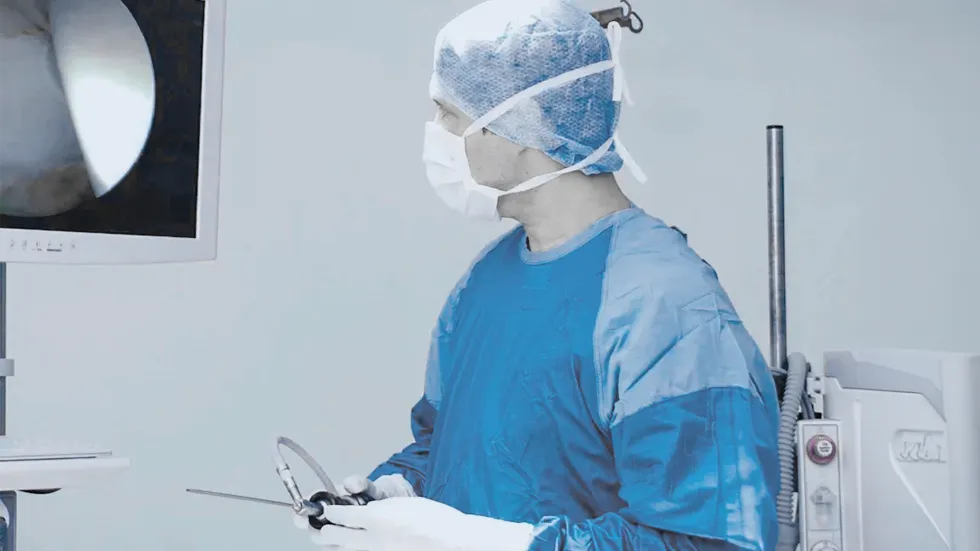
In modern hip surgery, most joint-preserving operations today are performed using arthroscopy, in this case hip arthroscopy in Berlin.
This is a very soft tissue-sparing surgical procedure. Through two small skin incisions of about 1 cm each, a thin camera and a working instrument are inserted into the hip joint.
While just a few years ago large skin incisions were necessary to surgically access the hip joint, today most joint-preserving operations can be performed with this procedure. The hospital stay is approximately two days.
Hip Arthroscopy for Various Conditions
Femoroacetabular Impingement (FAI / Hip Impingement)
Irregularities in the shape of the two joint partners (femoral head and acetabulum) lead, due to the tight bony guidance of the hip joint, to premature joint wear and chronic injuries to the soft tissue joint structures.
The shape abnormality can originate from the femoral head (cam impingement) or from the acetabulum (pincer impingement). Mixed forms of the above impingement types often exist.
The shape abnormality of the joint partners (FAI impingement) is now considered the most common cause of the development of wear and premature osteoarthritis of the hip.
Treatment of chronic changes in soft tissue structures is quite possible and can prevent premature joint wear or, in the case of existing wear, delay further progression of osteoarthritis. Even bony changes of the femoral head-neck and, with slight limitations, of the acetabulum can be performed arthroscopically by your orthopedist in Berlin.
Damage to the Labrum (Labral Tear)
Injuries to the labrum trigger severe, often stabbing pain in the groin and/or hip. Labral injuries are often caused by acute dislocations of the hip joint or chronic repetitive damage (femoroacetabular impingement). Sports with wide hip movements – such as soccer, karate, or ballet – offer intensive potential for sports injury.
Using arthroscopic surgery, suturing, denervation, or smoothing/partial resection of the labrum can be performed. In very pronounced cases, the labrum is even replaced with the patient’s own tissue.
Injury to the Ligamentum Teres (Ligamentum capitis femoris tear)
The cause is joint dislocations and subluxations. Pain is often described as “deep in the hip” with a sometimes burning, pressing quality. After resection or partial resection of the ligamentum teres, the patient is often immediately symptom-free.
Loose Bodies – Chondromatosis
Symptoms include joint blockages and entrapment. Causes include impact trauma, osteoarthritis, and diseases of the synovial membrane. In chondromatosis, a benign joint tumor, a multitude of loose bodies occur.
Early Osteoarthritis
In the early stages of osteoarthritis, even with already severe pain, the time for joint replacement can be delayed. However, arthroscopy should no longer be performed in advanced osteoarthritis.
Unexplained Hip Pain
Even with ultrasound diagnostics and MRI, severely painful conditions of the hip joint sometimes remain hidden from pre-operative examination methods. In unclear cases, a test infiltration with a local anesthetic into the joint under X-ray control provides crucial clues. If symptoms subsequently disappear, the cause of the complaints is to be found in the joint. Hip arthroscopy in Berlin discovers and eliminates the cause of the complaints.
Pelvic Osteotomy – Minimally Invasive Periacetabular Osteotomy (PAO)
This surgery may be considered for pronounced hip dysplasia.
Femoral Head Necrosis (Reduced Blood Supply to the Femoral Head)
With the help of a minimally invasive procedure, the blood supply to the under-perfused femoral head is improved. Occasionally, the procedure is combined with hip arthroscopy. Often, only a small skin incision of about 1 to 3 cm laterally along the hip is necessary.
If you have questions about hip arthroscopy in Berlin, please call us at 030 / 22 60 53 000 at our practice for orthopedics and sports orthopedics.
Dr. Alexander Moser
Your hip specialist in Berlin
”Hip surgery at the highest level”
Hip impingement Berlin – Hip arthroscopy Berlin – Femoroacetabular impingement (FAI) Berlin
Watch the explainer video
Frequently asked questions
What is the procedure for hip arthroscopy?
<p>The exact procedure for hip arthroscopy can vary depending on the individual situation, but here are general steps commonly included:</p><p>– <strong>Patient preparation:</strong> The patient is comprehensively informed about the procedure before surgery. This includes instructions on fasting before surgery and possibly discontinuing certain medications.</p><p>– <strong>Anesthesia:</strong> Hip arthroscopy is typically performed under general anesthesia. In some cases, regional anesthesia (spinal anesthesia) may also be considered.</p><p>– <strong>Patient positioning:</strong> The patient is placed in a special position on the operating table to ensure optimal access to the hip. A traction table is usually used, where both legs are softly padded and secured to slightly distract the femoral head from the acetabulum.</p><p>– <strong>Sterile environment:</strong> The surgical area is thoroughly cleaned, and the surgeon and medical team prepare for the sterile performance of the hip arthroscopy.</p><p>– <strong>Introduction of arthroscopic instruments:</strong> Small skin incisions (about 1 cm) are made through which the arthroscope (a tube-like camera) and special instruments are inserted into the hip. Occasionally, the procedure may be converted from a purely arthroscopic to a mini-open arthroscopic procedure.</p><p>– <strong>Examination of the joint:</strong> The surgeon examines the hip joint using the arthroscope to identify potential problems such as cartilage damage, inflammation, or irregularities.</p><p>– <strong>Surgical treatment:</strong> Depending on the diagnosis, various treatments can be performed, such as removing loose bodies, smoothing cartilage, or repairing tissue damage.</p><p>– <strong>Completion and wound closure:</strong> After completing the necessary interventions, the instruments are removed, and the small incisions are sutured or closed with Steri-Strips. If the capsule was opened, it is sutured.</p><p>– <strong>Recovery room:</strong> The patient is taken to the recovery room where their condition is monitored while they wake from anesthesia.</p><p>– <strong>Rehabilitation:</strong> Postoperative rehabilitation often begins soon after the procedure, with physiotherapy and specific exercises introduced to promote healing. A continuous passive motion machine may be used to promote mobility.</p>
What types of hip conditions can be treated with arthroscopy?
<p>Hip arthroscopy is often used to treat various conditions and problems in the hip joint. These include:</p><p>– <strong>Labral tears:</strong> Damage or tear in the labrum, which sits on the rim of the acetabulum and seals the central joint, can be treated with arthroscopy. The labrum is a ring of cartilage tissue that also contributes to joint stabilization.</p><p>– <strong>Impingement syndrome, femoroacetabular impingement:</strong> Hip impingement involves a painful conflict between the femoral head and the acetabulum. The bony guidance of the hip joint is very tight, and unfavorable shapes of the joint partners cause the femoral head to hit against the acetabular rim. Arthroscopy can be used to correct the unfavorable bony shape.</p><p>– <strong>Cartilage damage:</strong> Arthroscopy can be used to treat cartilage damage in the hip joint. This can be done through smoothing, cartilage refixation, or cartilage regenerative procedures.</p><p>– <strong>Loose bodies:</strong> Loose fragments of bone or cartilage can be present in the hip joint, causing pain and restricted movement. These can be removed through arthroscopy. A special form is chondromatosis, which can result in numerous loose bodies.</p><p>– <strong>Inflammatory conditions:</strong> Certain inflammatory conditions of the hip, such as synovitis, can be treated with hip arthroscopy by removing inflamed tissue.</p><p>– <strong>Bursitis:</strong> When bursae around the hip are inflamed, arthroscopy can be used to remove excess tissue and alleviate inflammation.</p>
What are the potential risks and complications of hip arthroscopy?
<p>Hip arthroscopy is generally considered a relatively low-complication procedure when performed by a hip specialist with appropriate experience. The usual risks of open surgery are minimized by the minimally invasive approach. Some potential risks include:</p><p>– <strong>Infection:</strong> Any surgery carries a risk of infection. This can be minimized through careful preoperative preparation and aseptic techniques and is considered rare in hip arthroscopy.</p><p>– <strong>Bruising and swelling:</strong> Minor bruising and swelling may occur after surgery but typically subside quickly.</p><p>– <strong>Injury to blood vessels or nerves:</strong> Major blood vessels and nerves are generally further from the surgical area. Smaller skin nerves may be irritated, leading to temporary numbness in small skin areas.</p><p>– <strong>Blood clots (thrombosis):</strong> Prolonged sitting or lying during and after surgery can increase the risk of blood clots. Measures such as early mobilization are taken to minimize this risk.</p><p>– <strong>Advanced cartilage damage:</strong> In some cases, arthroscopy can lead to further cartilage damage, although the procedure normally aims to treat existing damage.</p><p>– <strong>Recurrent symptoms:</strong> Some patients may experience recurring symptoms despite arthroscopy, especially if the underlying cause was not completely resolved.</p>
How long is the recovery time after hip arthroscopy?
<p>Recovery time after hip arthroscopy can vary depending on individual health status, type of procedure performed, and other factors:</p><p>– <strong>Short-term recovery:</strong> In the first few days after surgery, minor bruising, swelling, and general discomfort may occur. Patients can usually get up immediately with the help of walking aids or crutches.</p><p>– <strong>Recovery at home:</strong> Most patients can be discharged home within one to two days. Recovery often proceeds with the help of physiotherapy and specific exercises.</p><p>– <strong>Physiotherapy:</strong> Physiotherapy plays a crucial role in recovery. In the first weeks, therapy focuses on improving range of motion and muscle strength.</p><p>– <strong>Resumption of light activities:</strong> Light activities such as walking with support or cycling can be gradually resumed in the first weeks after surgery.</p><p>– <strong>Medium-term recovery (6-12 weeks):</strong> During this period, exercise intensity can be increased to further strengthen muscles and improve joint mobility.</p><p>– <strong>Long-term recovery (several months to one year):</strong> Full recovery and return to normal activities can take several months. High-impact sports activities are often gradually reintroduced.</p>
Will I have pain after surgery, and how will it be treated?
<p>Hip arthroscopy is generally considered not very painful. Pain may occur after hip arthroscopy, especially in the first few days after the procedure. Here are some aspects of pain management:</p><p>– <strong>Pain medication:</strong> The treating physician will typically prescribe pain medication to alleviate postoperative pain.</p><p>– <strong>Local anesthesia:</strong> In some cases, the surgeon may apply local anesthesia directly to the hip area to minimize pain.</p><p>– <strong>Cryotherapy (cold therapy):</strong> Applying cold packs to the operated area can help reduce swelling and relieve pain.</p><p>– <strong>Elevation and rest:</strong> Elevating the leg and adhering to rest periods can help minimize pain and promote healing.</p><p>– <strong>Physiotherapy:</strong> Early physiotherapy can help improve joint function and relieve pain.</p>
How effective is hip arthroscopy compared to other treatment options?
<p>The effectiveness of hip arthroscopy depends on the specific diagnosis, severity of the condition, and other individual factors:</p><p>– <strong>Labral tears and impingement:</strong> Hip arthroscopy has proven effective in treating labral tears and impingement syndromes, especially when damage is limited. Scientific data on this has the highest level of evidence.</p><p>– <strong>Cartilage damage:</strong> The effectiveness of hip arthroscopy for cartilage damage can vary. An experienced hip specialist can assess through diagnostics whether the individual case is suitable for targeted regenerative treatment.</p><p>– <strong>Loose bodies:</strong> Hip arthroscopy is very effective for removing loose bodies. If no secondary damage has occurred, symptom relief is often immediate.</p><p>– <strong>Inflammatory conditions:</strong> For synovitis, hip arthroscopy can be very effective for removing inflamed tissue.</p><p>– <strong>Alternatives:</strong> In some cases, conservative therapy may be considered as a first line of treatment. Conversely, open surgery may be considered for some hip conditions.</p>
Are there specific requirements or criteria for being eligible for hip arthroscopy?
<p>There are specific requirements and criteria for being eligible for hip arthroscopy:</p><p>– <strong>Clear diagnosis:</strong> A clear diagnosis should be present that justifies the need for hip arthroscopy.</p><p>– <strong>Unsuccessful conservative therapy or impending further joint deterioration:</strong> Hip arthroscopy is often considered only after conservative treatment approaches have not achieved the desired success or premature joint wear is imminent.</p><p>– <strong>Good general health:</strong> The patient should be in good general health to cope with the stresses of surgery and subsequent rehabilitation.</p><p>– <strong>Patient motivation:</strong> The patient's willingness to actively participate in postoperative rehabilitation and physiotherapy is crucial for the success of the procedure.</p><p>– <strong>No advanced osteoarthritis:</strong> For early, mild osteoarthritis, hip arthroscopy can reduce symptoms. For advanced hip osteoarthritis, hip arthroscopy is not the preferred option.</p>
What type of rehabilitation or physiotherapy is needed after hip arthroscopy?
<p>Postoperative physiotherapy is a crucial component of the healing process after hip arthroscopy:</p><p>– <strong>Early mobilization:</strong> Immediate, controlled movement is important to maintain joint function and reduce the risk of complications.</p><p>– <strong>Muscle strengthening:</strong> Physiotherapy focuses on strengthening the muscles around the hip to improve joint stability.</p><p>– <strong>Range of motion (ROM):</strong> Targeted exercises aim to gradually increase the range of motion of the hip joint.</p><p>– <strong>Balance and coordination:</strong> Exercises to improve balance and coordination are integrated.</p><p>– <strong>Gait analysis:</strong> Analysis of gait pattern helps identify possible deviations or imbalances.</p><p>– <strong>Scar care:</strong> Instructions for proper scar care may be part of the rehabilitation plan.</p><p>– <strong>Progressive intensification:</strong> Exercise intensity is gradually increased as rehabilitation progresses.</p>
Can hip arthroscopy be performed in advanced cases of osteoarthritis?
<p>Hip arthroscopy is generally not recommended as a primary option for advanced hip osteoarthritis. Arthroscopic procedures are more effective when joint damage is not far advanced.</p><p>Alternative options for advanced hip osteoarthritis may be considered:</p><p>– <strong>Hip replacement:</strong> For far-advanced osteoarthritis, hip replacement can be an effective solution.</p><p>– <strong>Conservative therapy:</strong> Pain management, physiotherapy, and lifestyle adjustments can help alleviate symptoms.</p><p>– <strong>Injection therapies:</strong> Corticosteroid injections, hyaluronic acid injections, or PRP can provide temporary relief.</p>
What are the long-term results and success rates of hip arthroscopy?
<p>Long-term results and success rates of hip arthroscopy can be influenced by various factors:</p><p>– <strong>Labral tears and impingement:</strong> In well-selected patients, long-term results can be positive, especially when arthroscopy has successfully helped restore normal joint function.</p><p>– <strong>Cartilage damage:</strong> Long-term results are variable. For minor cartilage injuries, arthroscopy can help alleviate symptoms.</p><p>– <strong>Loose bodies:</strong> When loose bodies are removed and have not yet caused secondary damage, results are usually very good.</p><p>– <strong>Inflammatory conditions:</strong> Positive long-term results can be achieved for inflammatory conditions.</p><p>Long-term effectiveness is not the same for all patients. Accurate assessment by the treating physician, regular follow-up examinations, and the patient's committed participation in rehabilitation are crucial for long-term success.</p>
What can I do to prepare for hip arthroscopy?
<p>Preparing for hip arthroscopy requires careful planning:</p><p>– <strong>Information gathering:</strong> Discuss all aspects of hip arthroscopy with your orthopedist.</p><p>– <strong>Medication management:</strong> Inform your doctor about all medications, vitamins, or supplements you are taking.</p><p>– <strong>Medical history:</strong> Discuss your medical history and inform your doctor about any existing health problems.</p><p>– <strong>Physiotherapy:</strong> The surgeon may recommend specific exercises before surgery.</p><p>– <strong>Home preparation:</strong> Ensure your home is set up so you can recover comfortably after surgery.</p><p>– <strong>Arrange transportation:</strong> Arrange transportation to and from the clinic in advance.</p>
What restrictions or behaviors should be observed after hip arthroscopy?
<p>After hip arthroscopy, certain restrictions and behaviors should be observed:</p><p>– <strong>Weight-bearing on the operated leg:</strong> In the first weeks, partial weight-bearing on the operated leg is recommended.</p><p>– <strong>Avoidance of certain movements:</strong> For labral sutures, flexion should not exceed 60° for 2 weeks and not exceed 90° for another 2 weeks.</p><p>– <strong>Activity restrictions:</strong> Avoid high-intensity activities, heavy lifting, and excessive bending or twisting of the hip joint.</p><p>– <strong>Physiotherapy:</strong> Participation in recommended physiotherapy is crucial.</p><p>– <strong>Driving prohibition:</strong> It may not be safe to drive a vehicle in the first weeks.</p>
Is hip arthroscopy performed under general anesthesia?
<p>Hip arthroscopy is typically performed under general anesthesia. General anesthesia ensures that the patient is unconscious during the procedure and feels no pain.</p><p>In some cases, regional anesthesia, such as spinal or epidural anesthesia, may be used in combination with general anesthesia. This allows for additional pain relief and muscle relaxation during the procedure.</p>
How long does it take to return to normal activities?
<p>The time to return to normal activities varies depending on individual healing progress:</p><p>– <strong>Early phase (1-2 weeks):</strong> You will need crutches or walking aids.</p><p>– <strong>Middle phase (2-6 weeks):</strong> Gradual weight-bearing on the operated leg, physiotherapy is intensified.</p><p>– <strong>Late phase (6 weeks to several months):</strong> Weight-bearing is increased, resumption of daily activities.</p><p>– <strong>Full recovery (several months to one year):</strong> Return to more intensive activities and sports.</p>